

Introduction
I remember walking into a small print shop and coughing within the first minute — the air was thick and the workers looked tired. In that space, fume extraction products were present but underpowered, and the difference was obvious. Data from workplace safety reports show airborne contaminants like VOCs and particulate matter can spike quickly in confined areas, and those spikes translate to real health and productivity losses. So here’s the question I kept asking myself: are we solving the right problems or just buying louder fans? (I promise I’ll get practical in a minute.)
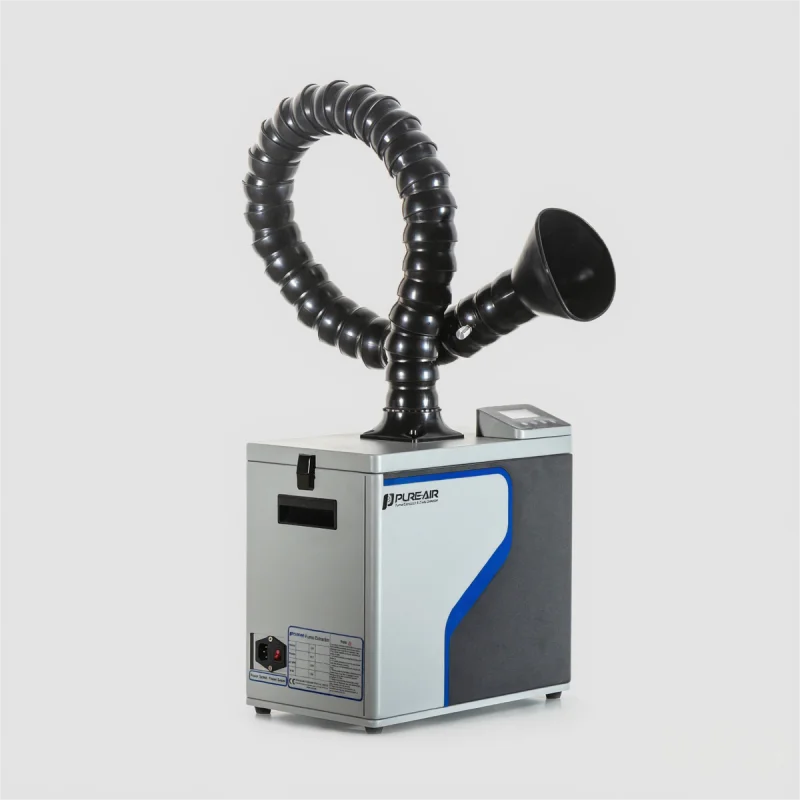
What I want you to take away right now is simple: better air control saves more than breaths — it saves time and reduces sick days. When I talk to shop owners, they often focus on price and ignore capture hood design, filtration efficiency, and airflow rate. Those are the technical levers that matter. Ready to dig under the surface and see why some systems fail while others actually work? Let’s move on.
Unseen Fault Lines: Where Traditional fume collectors Fail
First, let me define what I mean by failure. Too often, a system “works” on paper but not in practice. Capture efficiency falls short because the capture hood is the wrong size, the ductwork causes high static pressure, or the fan velocity isn’t matched to the payload. In plain terms: air doesn’t go where you expect it to. I’ve seen HEPA filter banks that clog fast because upstream pre-filters were skipped — and yes, that matters. Look, it’s simpler than you think: if you don’t control the airflow path, filtration tech like activated carbon or fine HEPA becomes irrelevant.
Why do these faults persist?
We tend to buy based on specs alone. Advertised airflow rates look impressive until you factor in real-world pressure drops from bends, long ducts, and dirty filters. Manufacturers may list filtration efficiency at a lab flow, but the system in your shop operates at different pressures. I’ve developed a habit of asking three simple questions on site: where will the capture hood sit, what’s the expected particle load, and how long between filter changes? If those answers are vague, expect underperformance. — funny how that works, right?
Looking Ahead: Case Example and the Future of Cleaner Workspaces
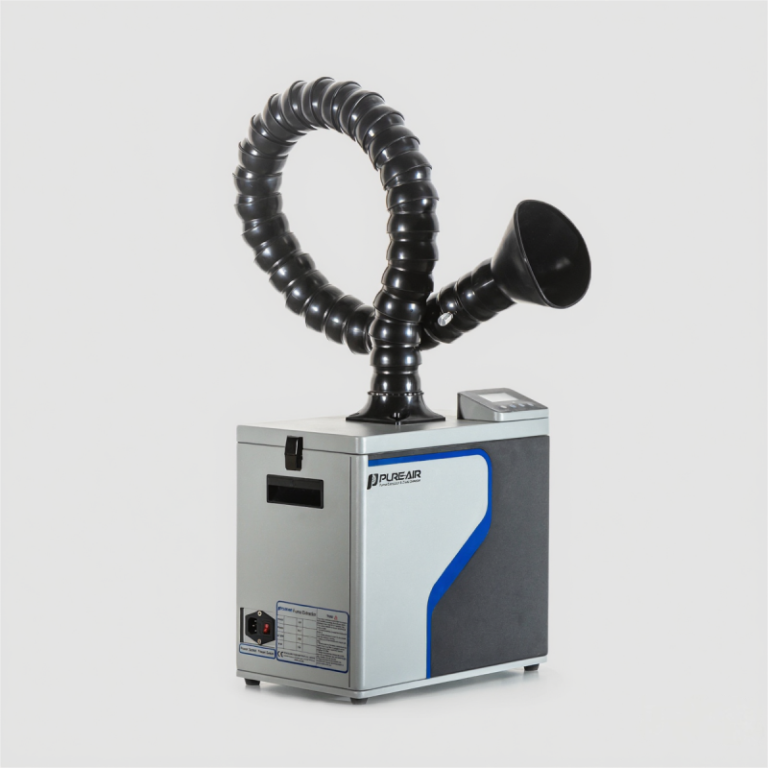
Let me tell you about a small signage shop I worked with. They replaced an undersized unit with a system designed around actual use. We reworked the capture hood, shortened the ductwork, and added a staged filtration train — coarse pre-filter, activated carbon for odors, then a true HEPA stage. The result: measured particulate levels dropped dramatically within a week, and workers reported less irritation and fewer headaches. That hands-on change mattered more than swapping brands. It proved that design and matching the system to the workspace trumped buying the most powerful motor.
Real-world Impact — What to measure next?
Looking forward, I see two clear trends: smarter sensors at the capture point and modular filtration that’s easy to maintain. Sensors reduce guesswork by tracking localized VOCs and particulate counts. Modular filter cartridges make servicing faster and cheaper, which keeps systems operating at rated efficiency. We should expect better integration between capture hoods and control systems — less manual tuning, more automatic balancing. These are not sci-fi ideas; they’re practical steps that reduce downtime and extend filter life.
Before you decide, here are three evaluation metrics I always recommend: 1) Capture efficiency at the hood (not just fan CFM), 2) Total system static pressure under real load, and 3) Ease and frequency of filter maintenance (cartridge swaps, access points). Use these and you’ll pick systems that do the job day-in, day-out. I’ve seen it work. And if you want a resource to start with, check out PURE-AIR for applied solutions and real-world case notes.
