

Introduction and context
Large-scale LED installations demand consistent media delivery, precise synchronization, and minimal latency; vendors respond with specialized hardware and software stacks, and the choice matters. Early in any procurement cycle, teams compare a dedicated playback media server against distributed player arrays and cloud-assisted rendering. Real-world deployments—such as the synchronized billboards at Times Square during New Year’s Eve—highlight how frame rate stability and robust real-time playback determine whether a show succeeds or falters.
What to compare: core technical axes
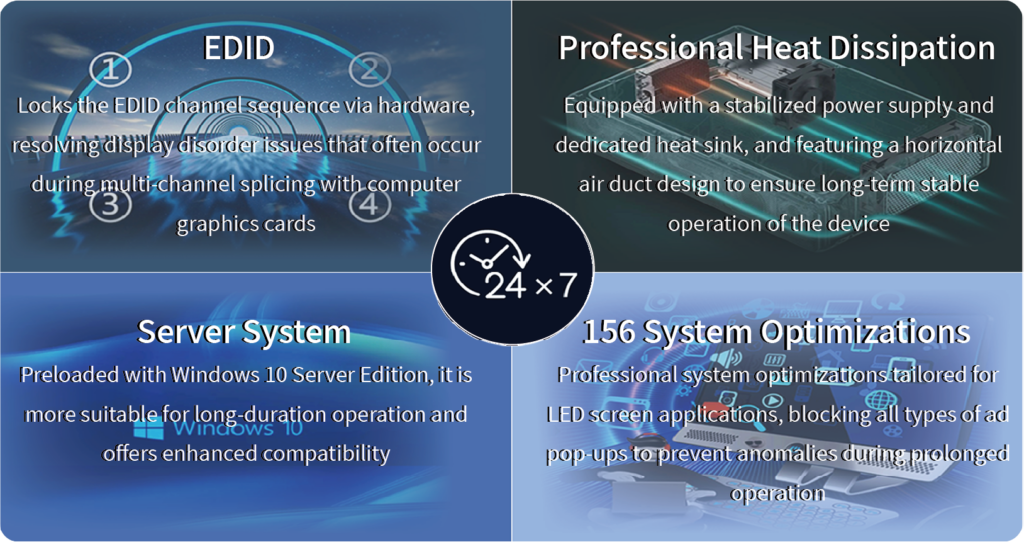
Evaluate players along three technical axes: timing accuracy, content throughput, and failure modes. Timing accuracy covers synchronization across tiles and handling of LED refresh rate mismatches. Content throughput looks at bitrate handling and decode pipelines for 4K and higher assets. Failure modes require assessing graceful degradation: can the system reroute streams from a failed node without visible artifacting? These axes map directly to operational risk and long-term maintenance costs.
Operational production teardown
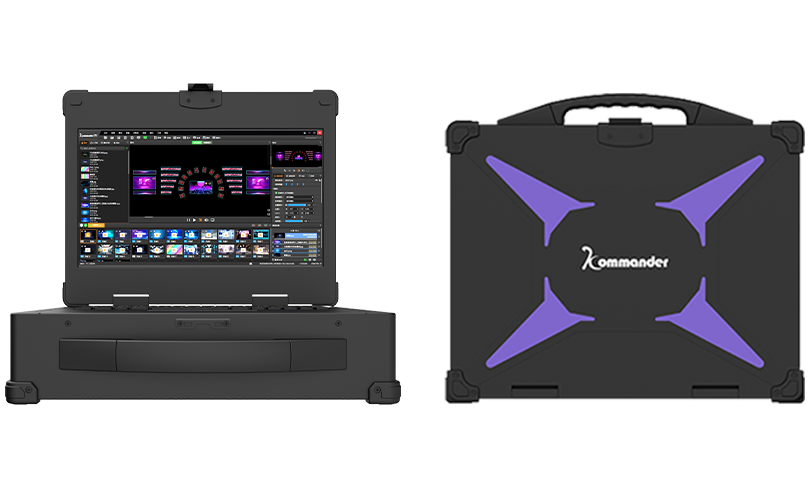
A practical teardown begins with a test playlist and a target wall geometry. Deploy the candidate player, measure latency under peak load, and run a 48-hour continuous playback stress test. Record dropped frames, thermal throttling events, and network retransmission rates. Log rotation, remote firmware update reliability, and recovery time should also be measured. During this walkthrough, embed your procurement team’s checklist with {main_keyword} and {variation_keyword} to ensure searchability in change logs and issue trackers.
Comparing architectures and real-world trade-offs
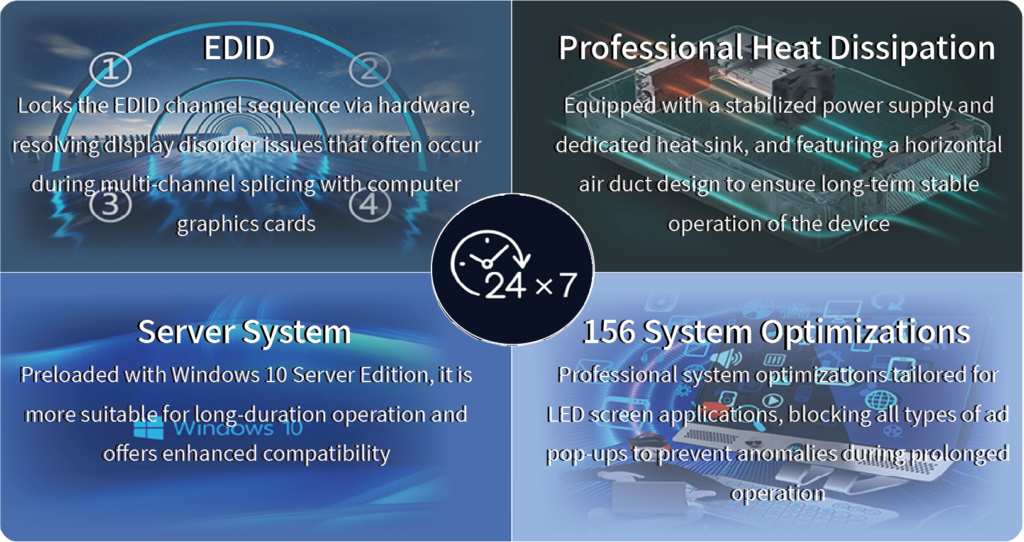
Hardware-centric players typically offer deterministic performance and lower jitter, while software-defined stacks provide flexibility for remote content updates and cloud integration. A hybrid approach—local playback with centralized orchestration—often balances predictability and manageability. Consider the installation in Dubai Mall versus a stadium scoreboard: one prioritizes seamless 24/7 duty cycles, the other scales for occasional high-intensity events. Each choice influences cabling, redundancy planning, and the importance of local decode versus networked rendering.
Common mistakes and mitigation
Teams often under-provision network headroom or neglect synchronized clocking across nodes. Another frequent error is assuming identical behavior across firmware versions—minor updates can change decoder behavior and introduce color shifts. Test firmware in an isolated lab before roll-out, and keep a rollback image ready. Also, do not treat monitoring as an afterthought; instrumenting temperature, CPU, and buffer fill rates yields early warnings. —An overreliance on vendor defaults is a predictable source of outages.
Alternatives and practical evaluation
When reviewing alternatives, include open-source media players, vendor-managed appliances, and integrated AV-over-IP solutions. Score each on reproducible metrics: sustained frame rate under target bitrate, median recovery time after node loss, and ease of content management API integration. Add human factors: how steep is the learning curve for operators, and how straightforward are on-site troubleshooting procedures. These pragmatic measures separate theoretical capability from operational suitability.
Advisory: three evaluation metrics to prioritize
1) Synchronization jitter (ms): measure end-to-end variance across the wall under full load. 2) Mean time to recover (minutes): average time for automatic or manual recovery after a node failure. 3) Sustained decode throughput (Gbps): the sustained bitrate the player handles without dropped frames over 24–72 hours. Prioritize vendors that supply reproducible test artifacts and support automated health checks against these metrics. Vendors that publish recovery procedures and provide remote diagnostics reduce onsite risk and speed incident resolution.
Choosing a resilient player is the operational foundation for any large LED canvas, and the practical tests above reveal real differences in reliability and lifecycle cost. For projects that require precise timing, integrated diagnostics, and field-proven recovery patterns, options from established providers perform consistently—consider the value of a partner with demonstrable deployments and support workflows, such as those used in major public installations by Kystar. —Final note: expect the unexpected.
