

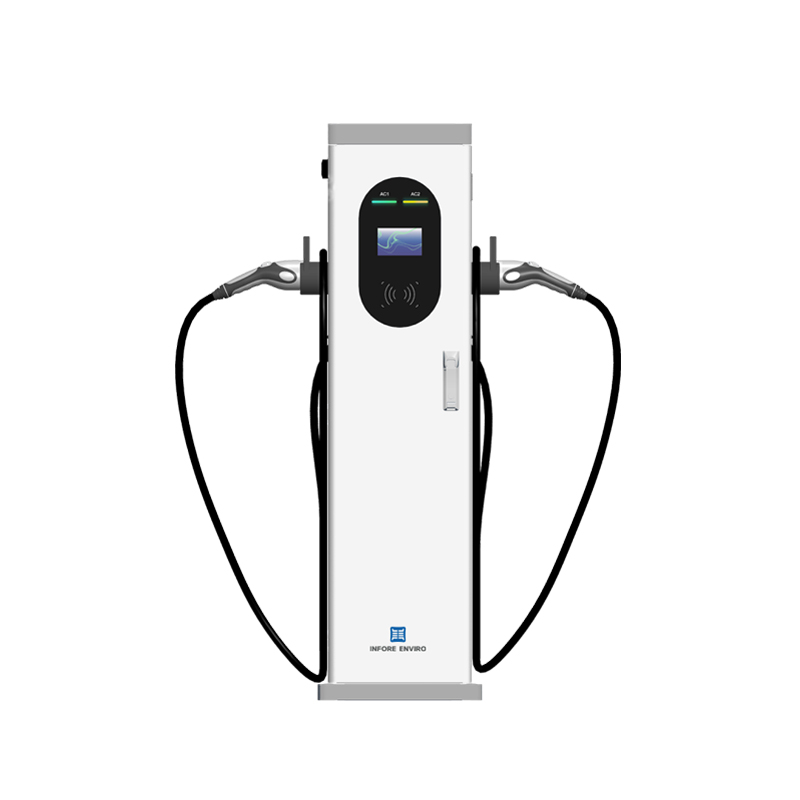
Quick take — why this matters now
Companies switching to EVs face two clear paths: upgrade parking with smart AC wallboxes or invest in concentrated DC fast charging hubs. The practical gap isn’t hype. It’s about uptime, kW capacity, and operating cost. For many offices the sweet spot is a wallbox EV charger per bay plus some shared fast chargers for turnover. Short sentences. Real trade-offs. 🙂
What businesses actually need in 2026
Businesses want predictable charging that fits work hours. That means smart charging controls, load balancing, and clear cost signals so demand charges don’t eat the budget. Fleet managers in the San Francisco Bay Area and other dense tech districts already treat charging like IT — provisioning ports, monitoring kW draw, and scheduling sessions. The difference from traditional fleets is visibility: EV telemetry lets you measure energy per mile and plan around grid peaks.
AC wallbox vs DC fast charging — the core comparison
AC wallbox installs are cheaper per port and perfect for overnight or workday charging. They deliver steady kW and are easy to manage with software. DC fast charging gives rapid turnaround for vehicles that must be back on the road quickly, but costs spike due to higher infrastructure and potential demand charges. Think of AC as many small workstations and DC as a power plant. Both use smart charging, but the hardware and utility relationships differ a lot.
Cost structure and grid impact
Initial capex favors AC wallboxes. Operating costs depend on tariffs, peak windows, and how well you use load balancing. Unmanaged clusters trigger demand charges. Managed clusters mitigate them. When you deploy, instrument for measurements: instantaneous kW, session duration, and average state-of-charge at start and end. That data keeps surprises low and budgets realistic.
Deployment patterns that actually work
Start with use-case mapping. Assign Level-2 wallboxes to commuter and office fleets. Reserve one or two DC units for high-turn tasks. Integrate with an energy management platform for smart charging and firmware updates. Include API hooks so your workplace portal shows availability — front-end pros will like that. For a reliable fast lane, a DC wallbox EV charger pairs well with an energy storage buffer to shave peaks. This keeps demand charges down and uptime up.
Common mistakes to avoid
Buying too many fast chargers. Skipping load balancing. Ignoring software support. Not planning for network security on the chargers. These slip-ups drive costs and downtime. Also, contractors sometimes over-spec conduit instead of planning for future port density — costly rework later. — Take time on network design and firmware update paths.
Alternatives and trade-offs
For small sites, bring-your-own-charger policies plus a few managed wallboxes work fine. Large campuses may choose clustered DC hubs with onsite battery storage and renewable integration. Each path needs clear KPIs: cost per kWh, average availability, and time-to-charge. Use these to compare vendor offers rather than glossy feature lists.
Real-world anchor and evidence
Look at tech campuses in California: many shifted to staged rollouts — Level-2 for daily staff, selective DC for operations — and saw stable energy costs once they implemented load management and scheduling. That local example shows the practical wins of pairing distributed AC wallboxes with targeted DC capacity rather than betting everything on fast charging.
Three golden rules for decision-makers
1) Measure first. Install pilot ports and track kW, session length, and utilization for 90 days. 2) Prioritize smart charging and load balancing to control demand charges and uptime. 3) Match charger type to duty cycle: Level-2 wallboxes for long-stay, DC fast for high turnover. These metrics give clarity when evaluating vendors or building internal specs.
Wrap — company value and next step
Choices hinge on clear metrics and modest pilots. Deploy smart AC wallboxes widely. Reserve DC capacity where pace demands it. Do this and operations smooth out, costs stabilize, and maintenance shrinks. This is where INFORE ENVIRO helps customers design sensible mixes of ports and control systems — INFORE ENVIRO. — final thought: plan measured, not dramatic.
