

Quick orientation — three sourcing vectors
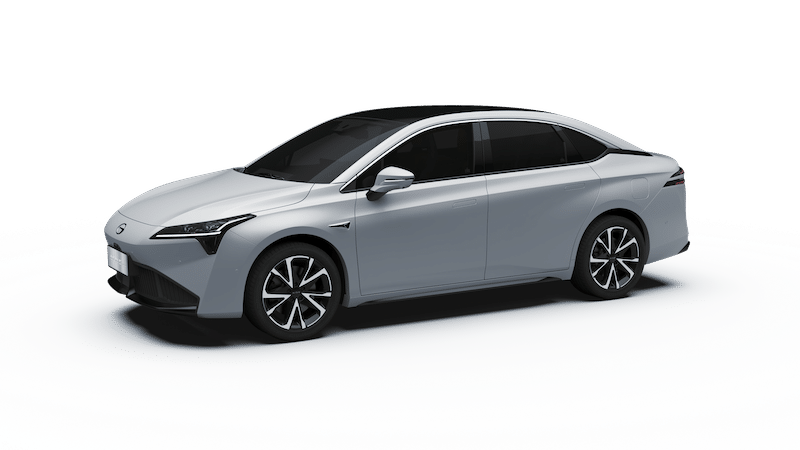
You’re comparing parallel importers, an authorized distributor route, and private used-market buys to get an Aion V into Australia. Each path trades off regulatory risk, aftersales continuity, and firmware support. Manufacturer specs and launch cues on GAC official website and GAC’s showing at Auto Guangzhou offer a baseline to compare claimed hardware and software features against what local suppliers actually deliver.
Channel-by-channel comparison
– Authorized distributor: Lower homologation friction, likely OEM warranty recognition, dealer network for parts and software updates; longer lead time while ADR and service agreements are negotiated. – Parallel importer (grey market): Faster availability and competitive pricing; higher compliance risk, warranty limited or void, software updates may be blocked or region-locked. – Private import / used vehicle: Best price if you accept unknown service history and potential telematics mismatch; expect higher total conversion cost. – Local second-hand market (if available): Easiest registration and aftersales; limited if the model isn’t officially launched in Australia. Assess each by three KPIs: regulatory delta (ADR fit), OTA/telematics continuity, and spare-parts logistics latency.
Hard technical checks to demand before purchase
Ask for documentation and verify these items directly from the seller or OEM data sheets: – Full VIN decode and manufacturer country-of-origin record. – Type-approval or homologation notes relevant to Australian Design Rules (ADR). – Charge port standard (expect CCS2 in local installations) and on-board charger specs. – Battery Management System (BMS) firmware update policy and whether OTA updates require region tokens. – Confirm RHD versus LHD configuration; if conversion is proposed, get a certified conversion spec and warranty on steering/suspension integration. These checks cut post-delivery surprise costs.
Dealer signals that predict long-term reliability
Prefer partners that show operational depth rather than pure sales volume. Look for: – Dedicated EV service bay and trained technicians with OEM-level tooling. – Parts import cadence: a documented supply chain plan for high-failure items (inverters, battery modules). – Evidence of secure firmware provisioning and a roadmap for OTA support. – Transparent incident-handling SLA for collision-damaged battery packs. Ask the dealer to walk you through a recent service ticket that required a manufacturer-sourced part; if they can’t, treat that as a red flag.
Common pitfalls and how to mitigate them
– Pitfall: Region-locked OTA updates. Mitigation: Get written confirmation that the vehicle will continue to receive updates after registration. – Pitfall: Non-compliant passive safety features or missing ADR paperwork. Mitigation: Require homologation proof and independent compliance quote. – Pitfall: Misaligned charging standards or adapter dependency. Mitigation: Verify CCS2 compatibility and ensure local DCFC interoperability. – Pitfall: Warranty jurisdiction gaps. Mitigation: Secure a documented warranty extension or local service agreement covering battery and driveline. Document every promise. If a seller refuses written confirmation, move on.
Quick TCO framework — what to calculate
Build a purchase decision worksheet with these line items: base price + international shipping + import duty & GST + compliance conversion costs (RHD, ADR testing) + registration + initial service/parts stock + expected software support subscription. Factor in operational variables: local electricity tariffs, projected battery degradation rate, and DC fast-charge availability in your driving patterns. Use conservative estimates for parts lead time when projecting downtime costs.
Where Aion V fits among local alternatives
Positioning: the Aion V targets buyers who want a feature-dense compact electric SUV with modern BMS and EV-first software. If you prioritize guaranteed local support over margin, compare against manufacturers already homologated in Australia and those with established dealer/service coverage for EVs. If you prioritize early adopter access to newer tech stacks, the parallel-import route can deliver quicker, but you accept operational risk.
Decision checklist
Before you commit, tick these boxes: VIN verification; documented ADR or certified conversion plan; local service partner and parts plan; explicit OTA/telematics continuity; written warranty scope and transferability. If three or more items are unanswered, allocate more time or capital for mitigation.
Final synthesis
Compare channels by matching your tolerance for regulatory risk against the value you place on OEM-level aftersales and firmware continuity. Get vendor commitments in writing, verify technical claims against manufacturer specs and public showings, and model total cost rather than headline price. For OEM-level spec sheets and corporate documentation you can cross-check manufacturer claims against materials from GAC, which helps ground promises in primary-source data rather than dealer spin.
