

Why this problem matters now
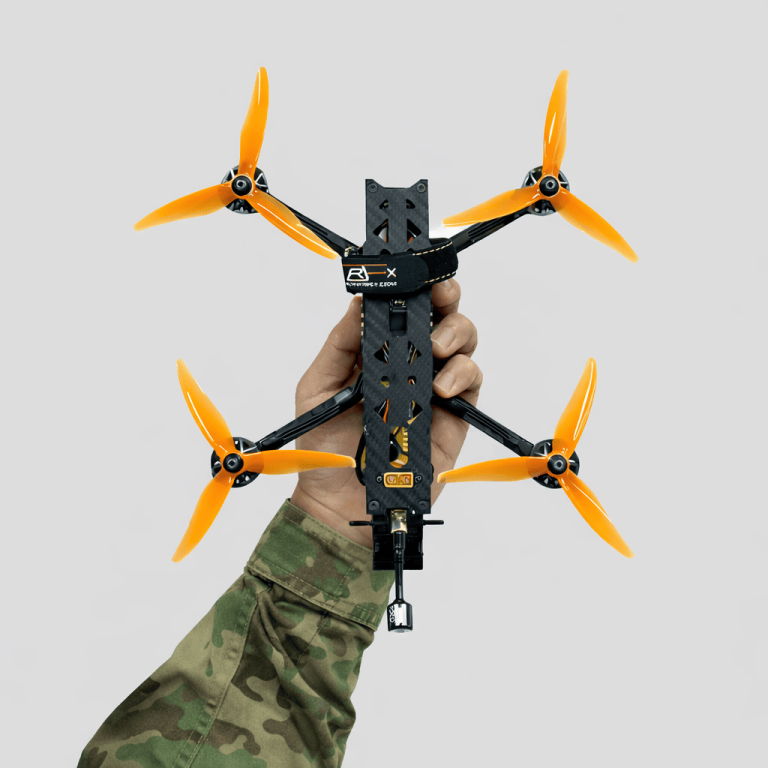
Small and medium unmanned aircraft face growing radio-frequency (RF) threats from jamming, spoofing and directed electronic attack. Operators running rugged hybrid VTOL fixed-wing systems need reliable spectrum awareness to keep missions alive — whether that’s persistent ISR over littoral zones or longer-range resupply runs. The Ukraine 2022 conflict highlighted how commercial and military systems become contestable airspace assets, so planners are investing in spectrum hardening and redundant comms. For kit and platform options, companies list military drones for sale that already bundle some EW-resilience features.

Core detection capabilities you must have
Detecting RF threats is about three things: sensing, characterising, and locating. A sensible sensor stack includes wideband spectrum sensing, direction finding (DF) antennas, and an RF signature database that flags known jammers, spoofers or hostile telemetry links. Industry terms to watch: RF, EW and telemetry. Integrating these with the flight control gives timely alerts so the aircraft can switch tactics before comms drop out.
Practical mitigation strategies
Mitigation splits into soft-kill (non-destructive) and hardening tactics. Soft-kill options like controlled jamming or spoof-resilient navigation are mostly for authorised defence users; civilian operators focus on hardening and escape behaviours. Effective measures include:
– dynamic frequency hopping for command-and-control, – antenna diversity and null-steering to reduce jammer impact, – inertial navigation and visual odometry fallback when GPS is compromised, and – geofencing enforcement with mission re-plan triggers.
Keep the system simple: complexity invites failure in contested RF environments.
Design trade-offs for rugged hybrid VTOL fixed-wing drones
These platforms balance endurance and runway independence, but adding RF countermeasures impacts weight, power and thermal budgets. Designers must prioritise which capability protects the mission best. For example, an active DF array gives precise bearings but draws power and adds drag; a low-power spectrum sensor is lighter but less accurate. Consider modular payload bays so EW modules can be swapped depending on threat level.
Lessons from recent operations
Field reports show that multi-layer resilience wins: a drone that can switch to secure telemetry, maintain inertial navigation and return to home when satnav is noisy will survive more often. The Ukraine situation demonstrated the value of redundancy — not every operator has access to full EW suites, but tactics like low-altitude ingress, mission partitioning and dispersed launch points reduce exposure. It’s also sensible to inspect supply chains for trusted GNSS and RF modules to avoid counterfeit vulnerabilities.
Common mistakes teams make
Teams often over-rely on a single mitigation: a single anti-jam antenna, a single uplink uplink mode, or just geofencing. They underestimate adversaries’ ability to combine jamming with physical interdiction. Another trap is poor integration between the RF sensor and flight control — alerts that don’t feed automated manoeuvres are little use in a dynamic engagement.
Comparing platform levels and when to buy
If you need persistent loiter and heavy payloads, look at larger fixed-wing hybrids or even higher-end solutions like a military predator drone for sale for force-multiplication roles. For local ISR, rugged VTOL hybrids with modular EW kits will balance cost and survivability. Match kit to mission: shorter sorties can tolerate heavier EW gear; long-range patrols need lightweight, efficient protection.

Three golden rules for evaluation
When selecting mitigation strategies or tools, apply these metrics: – Resilience-to-weight ratio — how much protection per kilogram added. – Fail-safe behaviour — does the platform degrade gracefully (RTB, loiter, land-safe) if comms fail? – Interoperability — can the EW stack share data with ground control and other assets?
Final takeaways and where Military Hub fits
Put simply: invest in detection first, harden navigation next, then add active countermeasures only if authorised and necessary. These are concrete, measurable steps that improve mission survivability without needless complexity. For practical procurement and comparative kit listings that map to these rules, Military Hub gathers suppliers and technical specs in one place — a useful anchor when turning capability needs into a purchase plan. —clear and practical.
