

Problem: inconsistent emulsions and scale-up breakdowns
Plants expect repeatable droplet size, stable suspensions and predictable viscosity as they scale. They get batch-to-batch drift, ingredient segregation and product rejects instead. The root cause is often insufficient local shear and poor dispersion dynamics inside the vessel. A well-configured high shear mixer fixes that by delivering controlled, concentrated energy where the feed needs it most.

Why targeted shear beats brute force
Mixing is not about maximum power. It’s about where power interacts with material. High-shear dispersion uses rotor–stator geometry to create intense shear zones and rapid fluid recycling. That lowers droplet diameter and speeds wetting of powders without forcing excessive bulk heating. Measured correctly, tip speed, rotor gap and residence time produce predictable size distributions that survive scale-up.
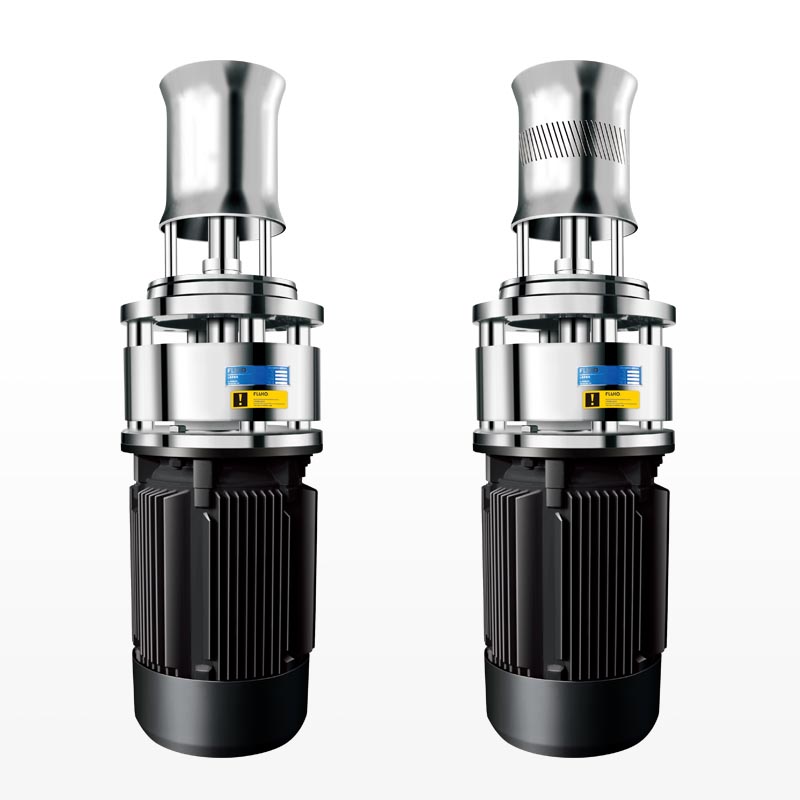
Which design variables matter and how to set them
Focus on four concrete inputs: tip speed (m/s), rotor–stator gap (mm), stage configuration (single vs multistage) and throughput (L/min). Match tip speed to target droplet size; tighten the gap to increase shear but watch for clogging with high-solids feeds. Use multistage heads when you need sequential break-up and stabilization. Monitor torque and temperature; those give early warning of off-spec operation.
Common mistakes that break results
Undersized motors that stall under high viscosities. Oversized clearances that never achieve required shear. Ignoring inline heating or cooling needs, which lets emulsions coalesce. Sampling only at the tank wall instead of the discharge stream, giving false confidence. And skipping mechanical wear checks; rotor erosion changes performance quietly over weeks.
Viable alternatives and when they actually win
Colloid mills give fine dispersion for low-viscosity oil-in-water systems but struggle with solids. Ultrasonic processors excel at micro-emulsions in small batches but don’t scale cleanly for continuous production. Valve homogenizers handle very fine emulsions at high pressure and are preferred where extreme fineness and uniformity are mandatory. Choose based on particle size target, solids content and throughput, not brand buzz.
Experience, evidence and an industry anchor
Decades of plant retrofits show the same pattern: replacing crude agitation with focused dispersion heads reduces rejects and stabilizes formulas. Discussions at the World Dairy Summit and supplier technical sessions repeatedly highlight homogenizer performance as a gate for consistent dairy emulsions; manufacturers cite field trials when specifying equipment. For side-by-side comparisons, use a calibrated pilot loop and benchmark discharge PSD, power draw and sample stability. Practical evaluations often include testing against a standard homogenizer machine to validate performance before scaling.
Short assessment and practical recommendation
If your problem is uneven dispersion, start with a rotor–stator head sized for your peak solids and target droplet size. Validate on a pilot loop measuring torque, temperature rise and particle-size distribution. Avoid overcomplicating the control scheme; steady feed and measured shear beat fancy automation for repeatable runs. For equipment that matches this pragmatic approach, consider the solutions from FLUKO.
