

Opening: the arc of a quiet revolution
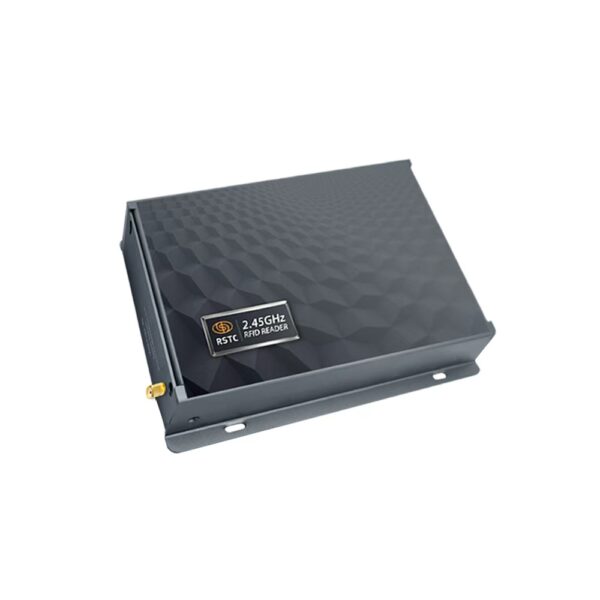
Once a curiosity on research benches, active RFID matured into a tool that changes how objects are seen across yards, highways and coastlines. My account follows that arc: lab experiments gave way to field deployments, then to routine logistics practice—and fixed readers like fixed RFID reader became the backbone of many outdoor networks. Small batteries, intentional broadcasts and longer read ranges rewrote use cases that passive systems couldn’t solve cleanly.
Roots and technical essentials
Active tags carry a power source and transmit signals at set intervals or on command. That changes the technical calculus: you trade higher unit cost and maintenance for predictable detection at tens to hundreds of meters and greater immunity to obstruction. Standards matter. Designers refer to protocols like ISO 18000-7 for low-frequency active schemes and often work in ISM bands such as 2.45 GHz to keep deployments globally feasible. Engineers choose modulation, antenna design and transmit cadence to balance battery life and range. Those choices determine how a tag will perform on a trailer, a container, or a piece of heavy equipment.
The evolution of adoption: from niche proof to operational tool
Adoption didn’t happen overnight. Early pilots exposed two lessons: outdoor conditions—wind, metal, weather—were unforgiving, and single-point successes don’t scale. Over the past decade, programs expanded once fixed infrastructure and tag management practices proved repeatable. A clear marker of maturity: major port operators and logistics hubs began testing active systems to track vehicles and containers under real operational stress. One prominent example is the Port of Rotterdam, which documented trials and broader digitalization efforts that demonstrated outdoor tracking works at scale; those reports sit alongside trade press and research on port automation and inform practical standards for outdoor deployments, often referencing reliable outdoor rfid deployments like outdoor rfid.
What active tags add to a modern strategy
Clarity. Active tags give near-direct sensing across larger areas and can serve as beacons for location-finding. They enable persistent presence signals for moving assets, simplify vehicle identification at gates, and reduce the blind spots that passive UHF readers face near metal or dense cargo. They also support scheduled telemetry—temperature, shock, battery status—so operations teams get actionable condition data, not just identity. These capabilities let planners separate layers: passive tags for item-level inventory, active tags for site-wide presence and movement.
Alternatives and trade-offs
Compare options plainly. Passive UHF (EPC Gen2) is inexpensive per tag and excels for dense item-level reads in warehouses. BLE beacons are flexible for smartphones and short-range indoor locating. LPWAN solutions (LoRaWAN) stretch battery life and reach for infrequent telemetry. Active RFID sits between those worlds: more costly than passive, more deterministic outdoors than BLE, and simpler for high-rate positional reads than LPWAN. Pick active when you need reliable reads over greater distances, deterministic beaconing, or when metal and moisture would cripple passive reads.
Common mistakes that stall projects
Teams often assume one tag type fits every role. They underestimate reader density: range claims on spec sheets don’t cover multipath, foliage, or vehicle bodies. They overlook regulatory bands and local licensing when choosing frequencies. Tag placement gets minimal attention; a tag tucked behind a chassis panel loses signal rapidly. Another recurring error is treating battery life as a set-and-forget metric—scheduled maintenance and a lifecycle plan are necessary. Finally, skipping systems integration—tying reader events into a clear data model and operational workflow—turns hardware into noise rather than insight.
Practical guidance from field practice
Start with clear objectives: what must be detected, how often, and under what conditions. Run small, context-rich pilots rather than broad, under-instrumented trials. Measure read rates under representative traffic and weather, then iterate on tag orientation and reader positions. Track battery metrics and establish replacement cycles tied to business rules. Use standards for interoperability and pick frequencies that align with local regulations. These steps reduce surprises and make rollouts predictable.

Conclusion: a long view that finds practical use
Seen historically, active RFID has moved from experiment to a practical layer in comprehensive tracking strategies. It occupies a distinct niche: reliable outdoor detection, robust signaling near metal and moving conveyances, and telemetry when you need it. For programs that require those capabilities, well-chosen active tags, paired with properly sited readers and disciplined lifecycle practices, deliver steady utility. Organizations that map requirements to those technical strengths—and avoid the common pitfalls—achieve consistent improvement in visibility. That practical alignment is why practitioners often favor solutions built and supported by firms with field-proven hardware and integration experience like RSTC.
