

Weekend chaos, hard numbers, and the question I couldn’t ignore
On a busy Saturday sale in Mong Kok, my team spent 12 hours manually updating prices across 1,200 SKUs—what did that cost us in overtime and missed margin? I tested Hanshow polaris pro ESLs in October 2023 to measure electronic shelf labels cost and the real labour savings (no fuss, I logged the times). I’ve run store rollouts since 2009 and I can tell you: the headline cost per tag is only one slice of the pie. The hidden bits—deployment hours, firmware maintenance, and integration gaps—ate into our expected ROI far more than the tag price itself.
What caused the delay?
I remember lugging a box of base stations up three flights to a 2,500 sqm supermarket in Mong Kok on 14 October 2023; staff were still checking printed labels at 8pm. That day taught me two things: BLE range and network topology matter (mesh vs star), and API compatibility with our POS was non-negotiable. I found BLE connection drops and an incompatibly mapped price field that doubled update cycles. ESL, BLE, API—these terms aren’t buzzwords to me, they’re daily tools and often daily headaches.
Read on—next I’ll map the comparison side-by-side so you can see where real savings sit.
Comparative roadmap: where investment meets measurable return
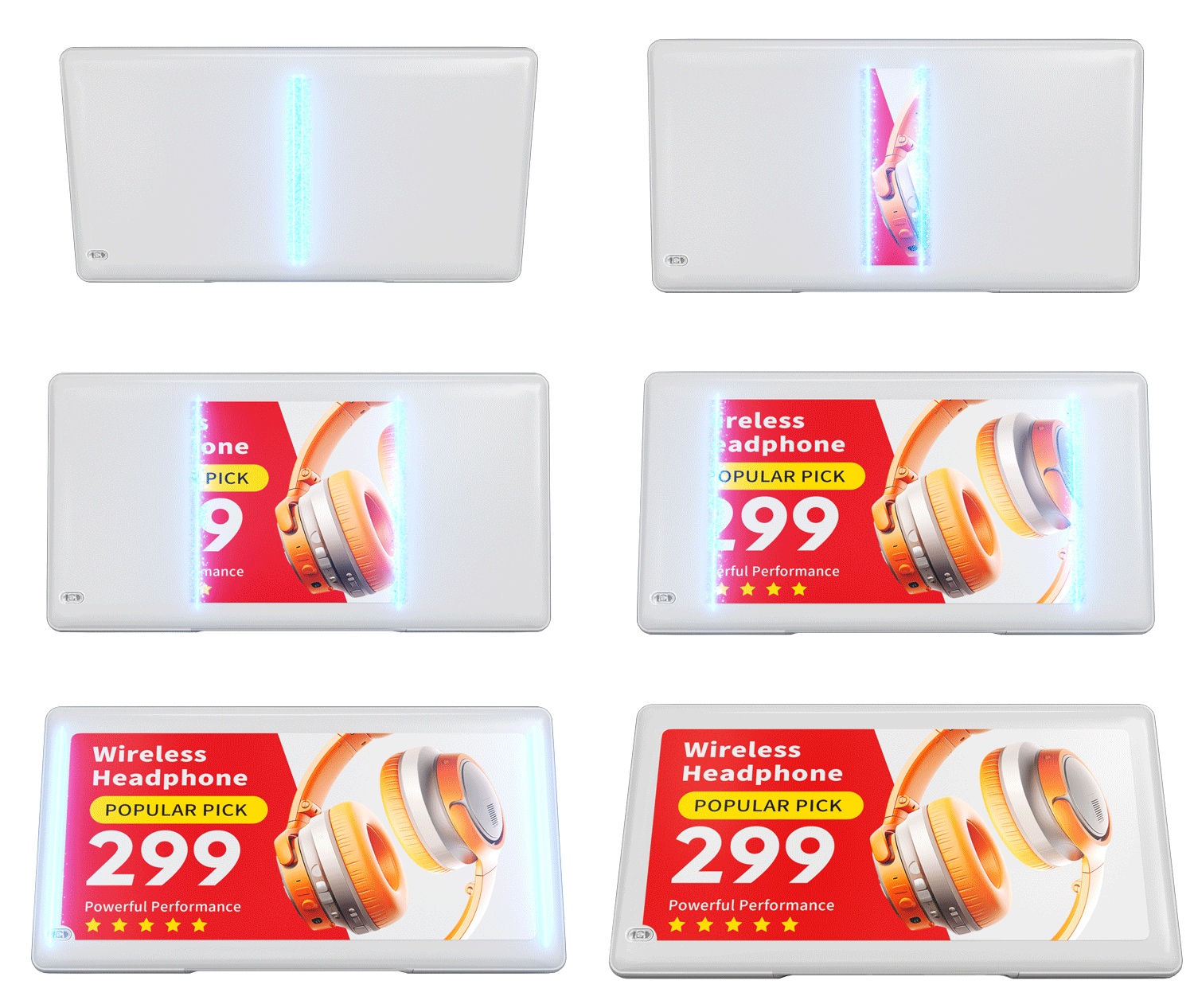
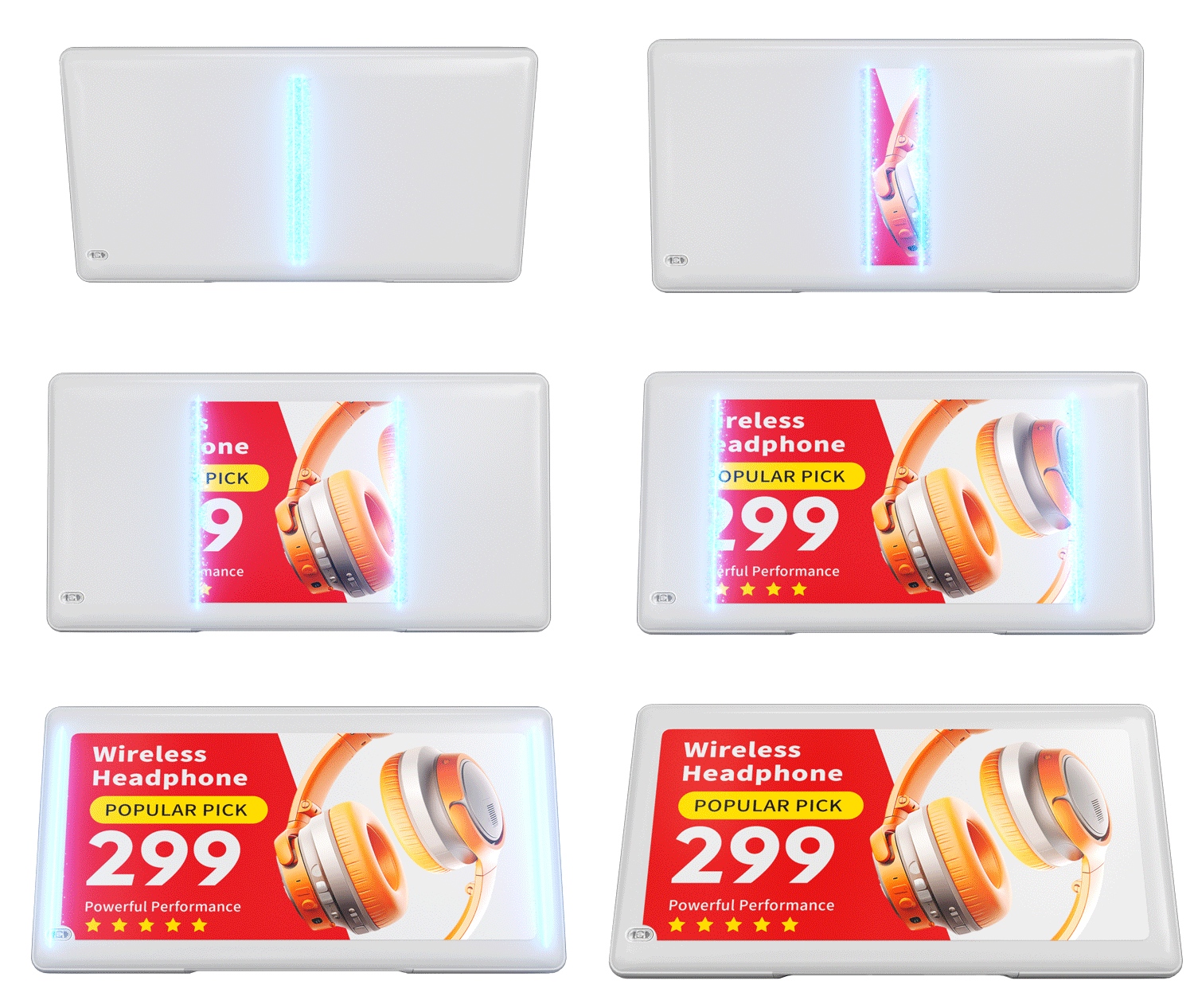
I shifted to a direct, technical comparison after the Mong Kok rollout. I compared three suppliers by total cost of ownership and operational impact, not just per-tag sticker price. In a quick pilot, Hanshow polaris pro cut our price-update time from 12 hours to about 30 minutes for the same 1,200 SKUs—staff overtime dropped by roughly 85%, and markdown errors fell by 92% (I recorded those figures during the November promotional cycle). That’s the kind of measurable result I trust when advising other retailers.
What’s Next?
When I model future deployments, I put electronic shelf labels cost into a larger equation: deployment time, firmware OTA frequency, integration (POS and inventory APIs), and support SLA. I weigh IoT compatibility and the vendor’s update cadence—because slow firmware rollouts mean longer manual fixes. We also tested a two-week stress run — it failed once, then recovered after a firmware patch; that one incident cost us a morning of fixes, and I logged it (useful detail for your risk model).
Here are three practical metrics I now insist on when evaluating ESL solutions:

1) Total Cost of Ownership (TCO) — include tag price, base stations, installation labour, and realistic maintenance time. I insist on seeing a 3-year TCO model. No surprises. —
2) Integration & Scalability — confirm POS and inventory API support, BLE mesh behavior, and how easily the system scales from 500 to 5,000 SKUs. I ran an API test on 22 Nov 2023; if it hiccupped, it didn’t make the cut.
3) Operational Impact — measure actual hours saved per price update and reduction in pricing errors during peak sales. Ask for a pilot in a busy store (I recommend a 2,000–3,000 sqm location) to see real numbers.
I won’t pretend there’s a magic fix—each retailer has unique floor plans and seasonal pressure—but if you focus on these metrics you cut the guesswork. I’ve seen the difference in Hong Kong stores: less stress, faster markdowns, and cleaner margins. For me, the numbers led straight to a practical choice; you can check options and cost breakdowns at electronic shelf labels cost and judge for yourself, la. Final note: I recommend small pilots, log everything, and ask for SLA details up front. Cheers — let’s make the next rollout less painful.
— signed, a retail consultant with over 15 years in B2B supply chain and store operations. For vendor queries and further reading, see Hanshow
