

Introduction — Why This Matters Now
Have you ever watched a plant grind to a halt over a handful of dusty powder and thought: that could have been avoided? (I have — too many times.) Silica manufacturers face that exact squeeze every day: production targets on one side and material behavior on the other. Recent industry checks show variability in batch throughput can climb by 12–30% simply because a feedstock clumps or a conveyor chokes. So what do we miss when we shrug at “just another handling problem”?

I’m writing because I care — and because the data is loud if you listen. When a single hopper hang-up forces line stops, the ripple hits cost, schedule, and customer trust. We can fix this, but only if we first admit the real causes (not the easy, comforting ones). In the next section I’ll dig under the surface — literal and figurative — and point to where the trouble truly begins. Let’s turn this into practical steps.
Technical Deep-Dive: Where Traditional Solutions Break Down
In our labs and on the floor, I keep coming back to a simple phrase: silica granular will behave differently based on tiny changes. Particle size distribution shifts by a few microns. Bulk density nudges up. Flowability drops. Those small moves change everything. I’ll be direct—many “fixes” are band-aids: heaters to reduce moisture, bigger motors, or louder alarms. They help sometimes. But they don’t treat root physics: surface chemistry and particle interactions. We then patch systems instead of redesigning for real handling stability. Look, it’s simpler than you think when you see the pattern.
Why do these fixes often fail?
First, engineers treat symptoms rather than variables. Moisture content goes up. We heat. The surface tension changes, but agglomeration remains because fines stick to larger grains. Second, metrics are wrong or absent. We monitor throughput but not shear behavior, and we track weight but not arch formation tendencies. Third, vendor solutions promise “universal” additives or single-parameter adjustments. They ignore how fumed silica, aerogels, or standard silica sand can react differently under the same conditions. I’m convinced—after years of troubleshooting—that you need both measurement and material science. Without particle-level insight, the next stoppage will surprise you — funny how that works, right?
Future Outlook: Case Example and Practical Shifts
What’s next? In one plant we swapped blind fixes for a short campaign: targeted sampling, particle characterization, and small-scale flow tests. We adjusted hopper geometry and introduced controlled vibration tuned to the material’s dynamic angle of repose. The result: consistent feed, fewer stoppages, and a 20% drop in corrective maintenance calls. That may sound modest, but it added predictable hours back to the schedule and restored trust on the line. I share this because it’s replicable — and because I’ve seen it work on different grades of silica granular with minimal capital spend.
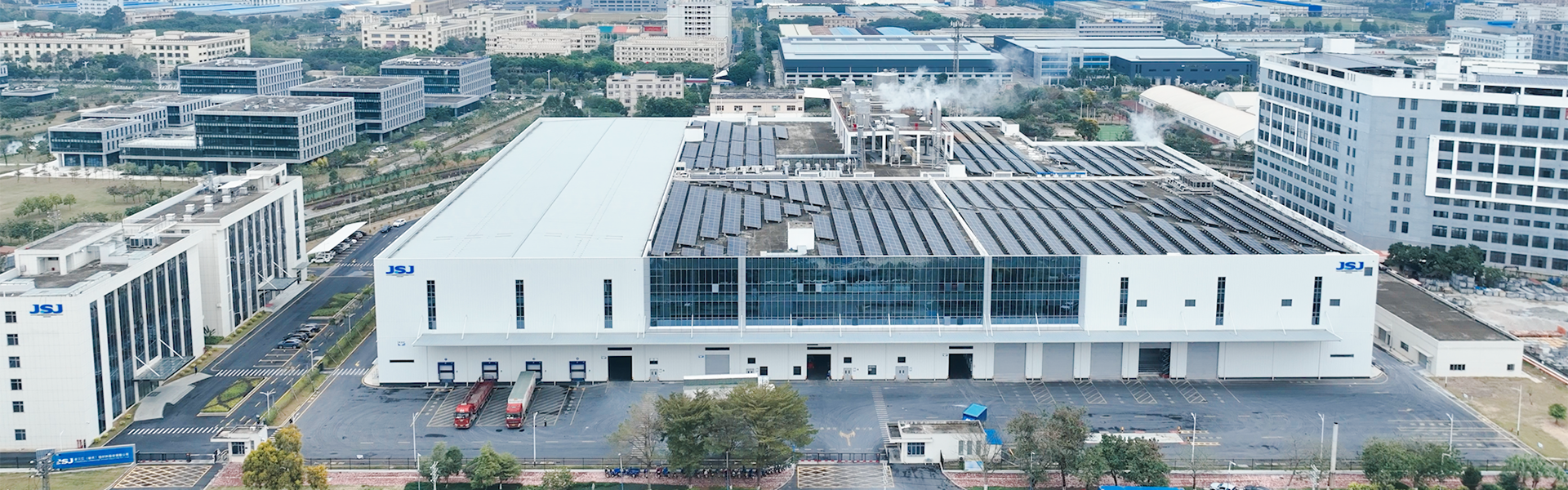
What’s Next?
Looking forward, I expect smarter sensors, better real-time metrics, and modular handling units that match material traits — not the other way around. We’ll use simple tools: flow cells, particle size analyzers, and moisture probes, paired with process tweaks. We’ll also need protocol: sample early, test often, and treat handling as a design variable. I’m hopeful — semi-formal about the outcomes, but frank about the work needed. Small wins add up, and if you start now, the cumulative gain is real — measurable in uptime, in predictability, and yes, in margin.
Closing — How to Evaluate Improvements
I want to leave you with three compact metrics I use when I advise teams: 1) Stable throughput variance: measure run-to-run feed consistency over time; 2) True downtime attribution: log minutes lost to material behavior vs. mechanical failure; 3) Handling index: a composite of flowability, bulk density shift, and moisture response. If a proposed change improves at least two of these, it deserves trial. If not — don’t bother. We owe ourselves honest testing, not hopeful guessing.
I’ll say it plainly: I prefer practical fixes that respect particle science and plant reality. We can make meaningful progress without grand overhauls. Start small, measure clearly, and iterate. If you want a partner who knows both the lab and the loading dock, check a trusted source like JSJ.
