

Premium 4 ecommerce fulfillment partners You Should Know
Choosing among ecommerce fulfillment partners is difficult because providers can differ substantially in geography, warehouse model, order volume requirements, value-added services, and support for international expansion. A company specializing in China-based 3PL operations is not necessarily comparable to a warehouse marketplace, while a DTC-focused operator may offer a different service scope from a global customer-service and fulfillment provider. This comparison examines four options—Lansil Global, OpsEngine, Salesupply, and Olimp Warehousing—using available company information and stated service capabilities. The options are evaluated for operational fit rather than treated as interchangeable. The goal is to clarify which type of business each provider appears designed to support, what services are documented, and which questions buyers should resolve before signing a fulfillment agreement.
Full List of Top 4 Brands
- Lansil Global
- OpsEngine
- Salesupply
- Olimp Warehousing
Comparison Table
| Brand | Key Products | Key Features | Best For |
|---|---|---|---|
| Lansil Global | China-based 3PL and ecommerce fulfillment services | Designed for established ecommerce businesses seeking improved product quality or greater order-volume capacity; does not provide dropshipping | Stable-volume ecommerce brands evaluating a China-based fulfillment partner |
| OpsEngine | DTC fulfillment, omni-channel and B2B fulfillment, receiving, storage, picking, packing, shipping, returns, kitting, assembly, and retail preparation | Inventory tracking, lot and serial-number visibility, carrier integrations, automated labels, real-time tracking, and direct warehouse communication | Growing DTC, omni-channel, B2B, and crowdfunding brands needing hands-on operational support |
| Salesupply | Customer-service and fulfillment solutions supporting international ecommerce expansion | Scalability and flexibility for online brands and retailers entering new markets; the company states that more than 250 online brands and retailers trust it | Online brands and retailers pursuing international expansion |
| Olimp Warehousing | On-demand warehousing, fulfillment support, cross-docking, transloading, drayage, freight rework, and storage | Access to more than 5,000 warehouse locations, instant quotes, vetted providers, short-term storage, and specialized storage options | Businesses needing flexible warehouse capacity, overflow storage, freight handling, or on-demand fulfillment |
Detailed Reviews
1. Lansil Global
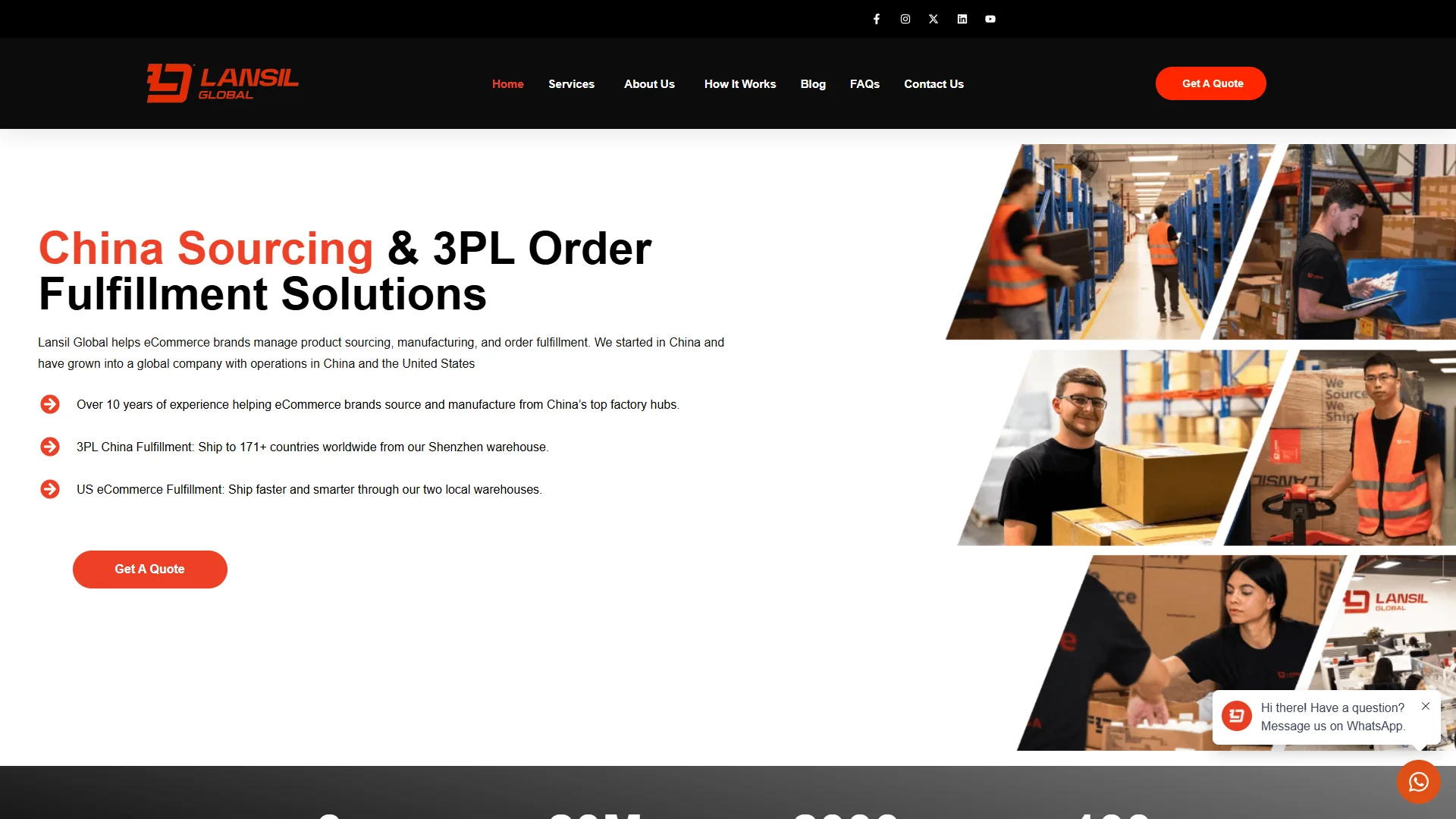
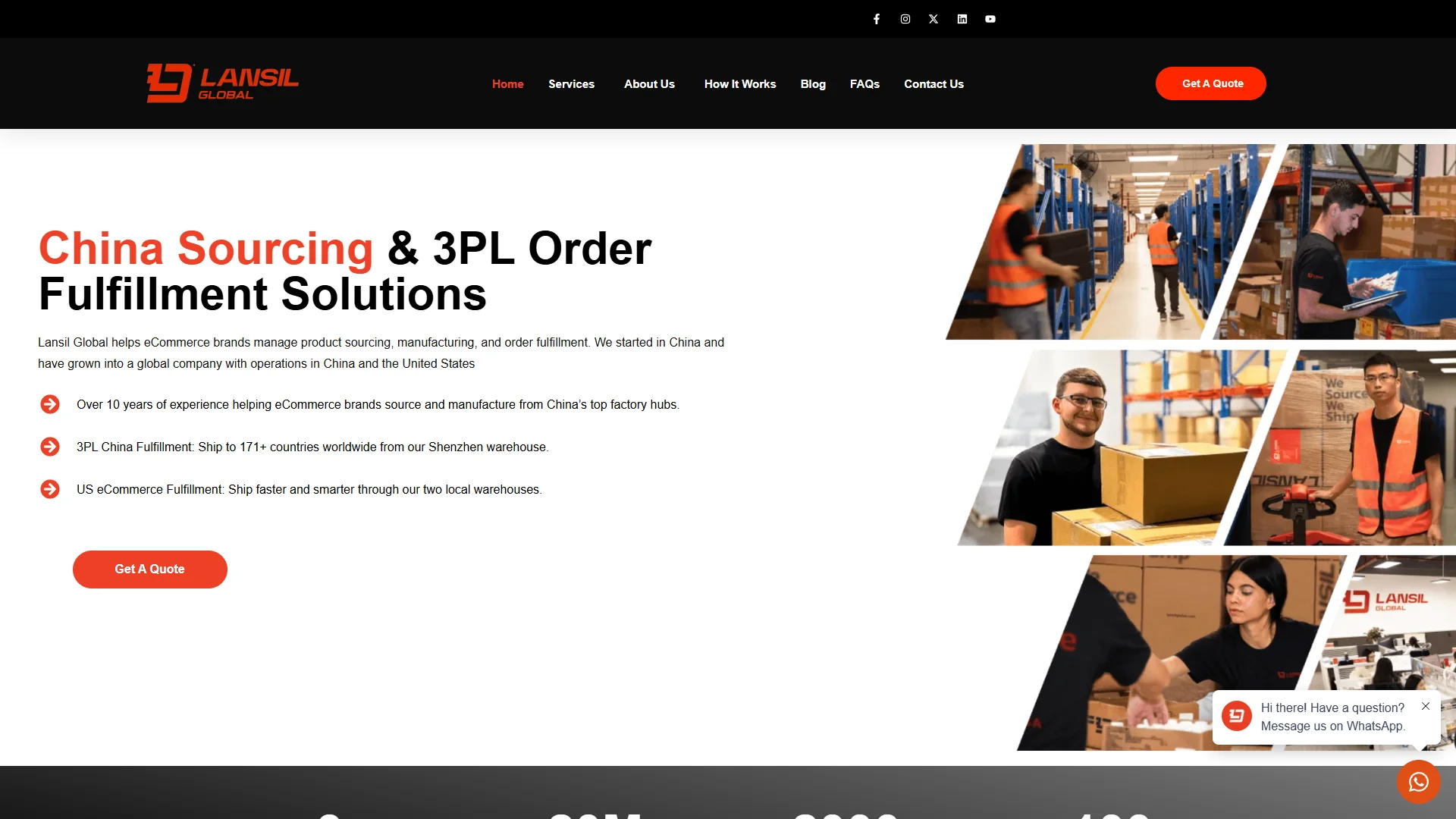
Lansil Global is positioned as a China-based third-party logistics partner for established ecommerce businesses with stable order volume. Its stated customer focus is different from a general-purpose dropshipping service: Lansil Global does not provide dropshipping and does not encourage cooperation with early-stage startups. Instead, it is intended for ecommerce companies seeking to improve product quality or scale order volume through a China-based fulfillment relationship. The available information does not clearly specify a complete catalog of individual services, warehouse locations, certifications, materials, or contract terms, so prospective customers should request those details directly.
Overview
The principal distinction for Lansil Global is its apparent fit with operationally established ecommerce brands rather than businesses testing an initial product concept. A stable order base can make warehouse processes, quality control, replenishment planning, and international shipping coordination more consequential. For that type of buyer, a China-based 3PL may be relevant when manufacturing or sourcing relationships, product-quality oversight, and fulfillment scale are central to the operating model.
Because the supplied information does not document specific technology integrations, storage capacity, carrier network, delivery-time commitments, returns procedures, or pricing, those items should not be assumed. Buyers should verify whether Lansil Global supports their sales channels, product categories, packaging requirements, inventory controls, export documentation, and destination markets. They should also clarify how quality issues are identified and resolved before inventory is dispatched.
Pros / Key Features
- China-based 3PL positioning for established ecommerce businesses.
- Relevant to brands seeking to improve product quality or increase order-volume capacity.
- Customer qualification is oriented toward stable ecommerce volume rather than early-stage startup experimentation.
- Does not provide dropshipping, which may be appropriate for brands seeking a conventional inventory-based fulfillment relationship.
- Potentially suitable for businesses that want fulfillment activity aligned with China-based supply-chain operations, subject to confirmation of the exact service scope.
Use Cases / Best For
Lansil Global is best considered by established ecommerce brands with predictable order volume, a need for China-based 3PL support, and an interest in improving product quality or scaling fulfillment. It is less suitable for a business specifically seeking dropshipping or a provider designed around very early-stage testing. Before selecting it, buyers should confirm warehouse ownership or operating arrangements, receiving procedures, inventory accuracy controls, product inspection processes, value-added packaging, international shipping options, return handling, and minimum volume requirements.
Questions to Confirm
- Which ecommerce platforms, marketplaces, and order-management systems can be integrated?
- What quality-control, inspection, packaging, and labeling services are available?
- What are the storage, receiving, pick-and-pack, shipping, and returns fees?
- Which countries and delivery services are supported, and what shipment data is provided?
- Are there minimum order volumes, onboarding requirements, or service-level commitments?
2. OpsEngine
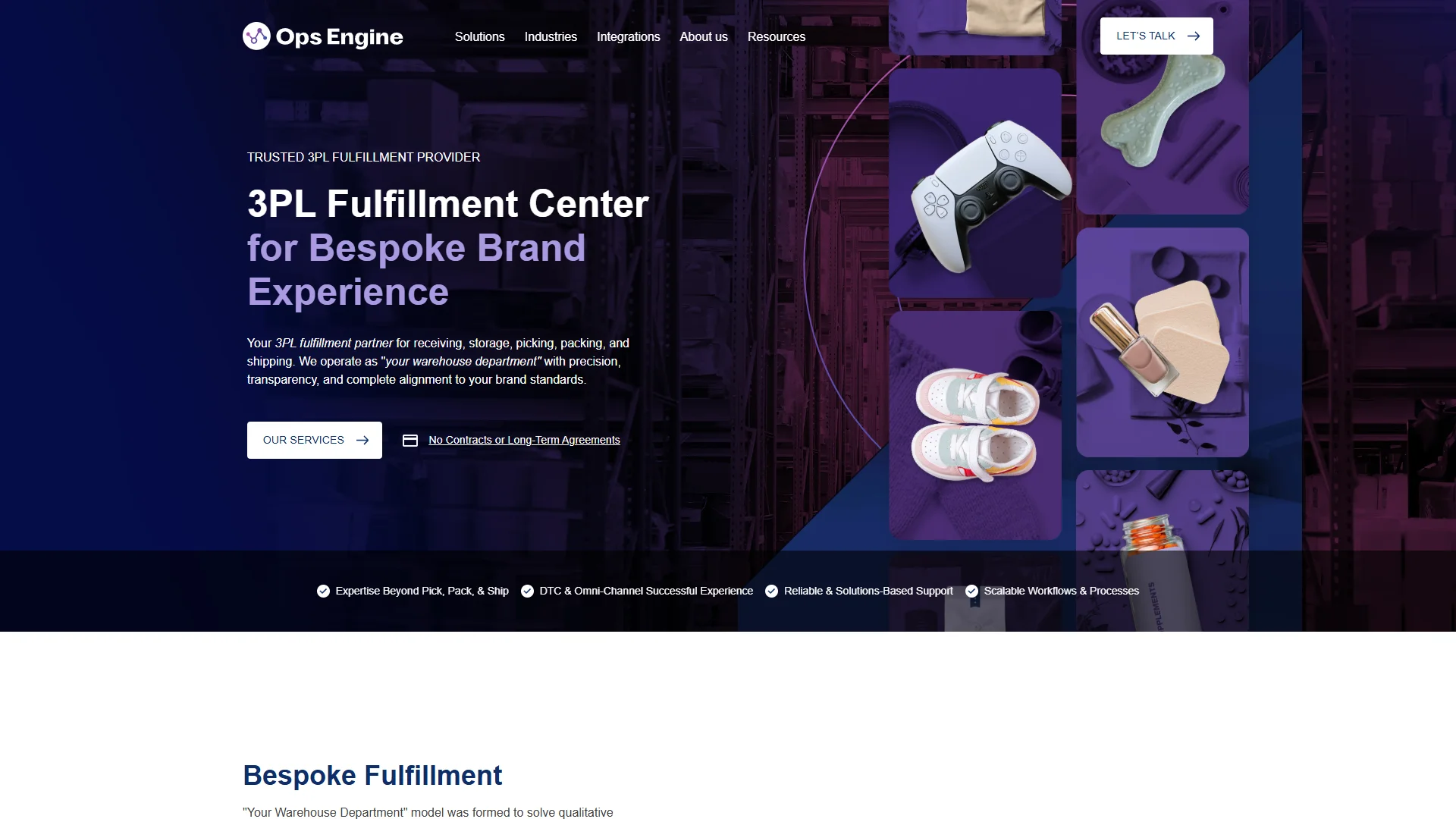
OpsEngine describes itself as a DTC fulfillment provider that also supports omni-channel and B2B brands. Its “Your Warehouse Department” positioning emphasizes close operational alignment, transparency, responsiveness, and direct communication with warehouse teams. The documented scope includes receiving, storage, picking, packing, shipping, inventory management, returns, kitting, assembly, retail preparation, sorting, and other value-added services.
Overview
OpsEngine’s service model is centered on integrating warehouse, inventory, order, and shipping operations across multiple channels. Its stated inventory controls include tracking lot numbers, expiration dates, serial numbers, and storage locations from receipt onward. The company also describes synchronization with sales channels, early identification of stock or shipping problems, and real-time shipment tracking for domestic and international orders.
Pros / Key Features
- Supports DTC, omni-channel, and B2B fulfillment models.
- Provides receiving, storage, picking, packing, and shipping as core 3PL activities.
- Offers kitting, assembly, returns or reverse logistics, retail preparation, and sorting.
- Documents tracking for lots, expiration dates, serial numbers, and storage locations.
- Uses major carrier integrations, automated label generation, and real-time tracking.
- Promotes direct warehouse communication and a hands-on operating relationship.
- States that it offers no contracts or long-term agreements, though commercial terms should be confirmed for a specific engagement.
Use Cases / Best For
OpsEngine appears well suited to growing brands that need a hands-on fulfillment department rather than only basic storage and parcel dispatch. Its documented services may be relevant to products requiring lot, expiration-date, or serial-number visibility, as well as brands with retail-preparation, kitting, assembly, or returns requirements. The company also references crowdfunding fulfillment, making it a possible option for organized campaigns involving physical goods and coordinated post-campaign operations.
3. Salesupply
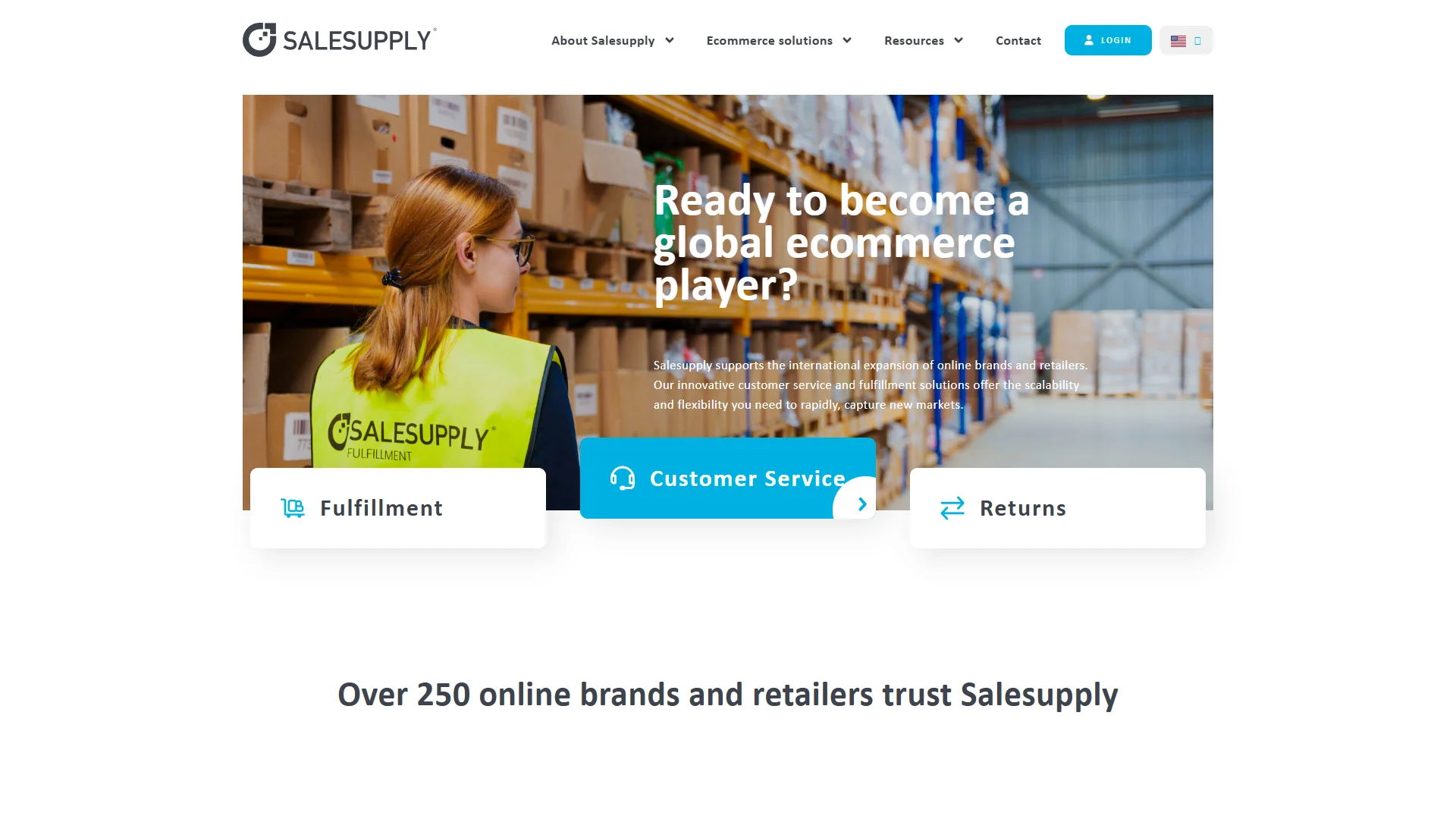
Salesupply positions its offering around the international expansion of online brands and retailers. Its available company information describes customer-service and fulfillment solutions intended to provide the scalability and flexibility required to capture new markets. Salesupply also states that more than 250 online brands and retailers trust the company.
Overview
The documented emphasis is market expansion rather than a detailed list of warehouse processes or product-handling controls. This makes Salesupply potentially relevant to brands that need support while entering additional countries or serving international customers. The available information does not clearly specify the company’s founding date, operating locations, complete fulfillment catalog, materials handling, certifications, carrier network, or detailed technology integrations.
Pros / Key Features
- Focuses on supporting international expansion for online brands and retailers.
- Describes customer-service and fulfillment solutions as scalable and flexible.
- Addresses businesses seeking to capture new markets.
- States that more than 250 online brands and retailers trust the company.
Use Cases / Best For
Salesupply is best considered by online brands and retailers whose main requirement is international growth support. It may be appropriate when customer service and fulfillment need to scale alongside entry into new markets. Buyers should ask for a precise breakdown of warehouse locations, inventory ownership, customs and tax support, returns handling, delivery coverage, customer-service languages, integrations, pricing, and performance reporting before comparing it with a conventional warehouse-based 3PL.
4. Olimp Warehousing
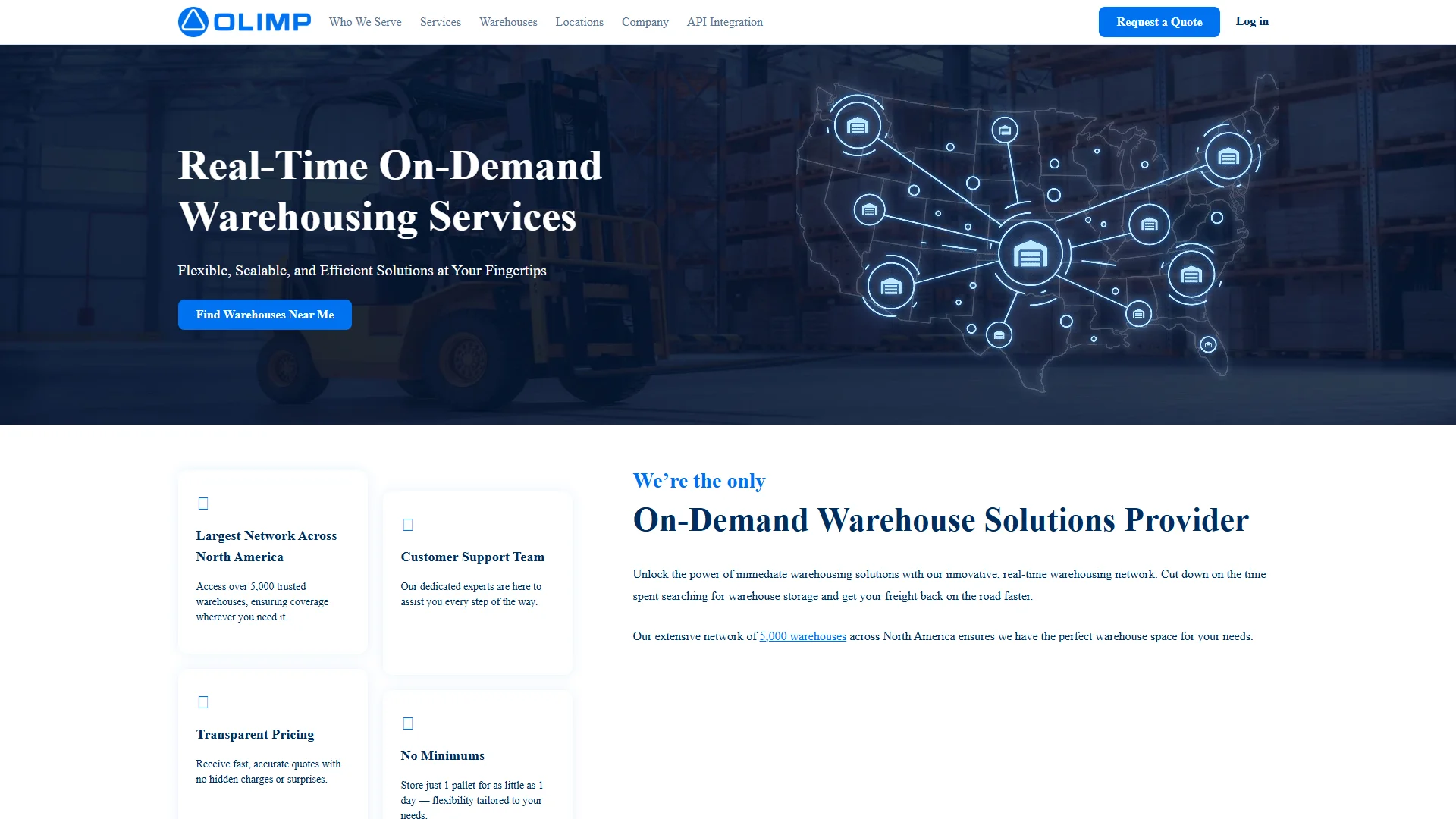
Olimp Warehousing presents a flexible warehousing model for businesses ranging from freight brokers and distributors to retailers and manufacturers. The company states that it provides access to more than 5,000 warehouse locations and offers instant quotes, vetted providers, and dedicated customer service. Its scope includes on-demand storage, fulfillment support, cross-docking, transloading, drayage, freight rework, and related logistics services.
Overview
Olimp Warehousing differs from a single-site ecommerce fulfillment operator because its offering is built around access to a broader warehouse network and flexible capacity. The company states that customers can store one pallet for as little as one day, with options that include general, retail, bonded, industrial, cold, FDA-approved, and dry warehouse environments where available. It also describes nationwide cross-dock access and services that connect ports, warehouses, and transportation operations.
Pros / Key Features
- Access to more than 5,000 warehouse locations, according to the company.
- On-demand and short-term storage options without long-term contracts in the described model.
- Instant quotes, vetted warehouse providers, and dedicated customer service.
- Cross-docking, consolidated freight, transloading, and drayage capabilities.
- Freight rework, inspection, pallet restacking, and repackaging services.
- On-demand ecommerce fulfillment support without requiring the customer to build its own warehouse infrastructure.
- Options for temperature-controlled, cold, FDA-approved, dry, and oversized-equipment requirements, subject to facility availability.
Use Cases / Best For
Olimp Warehousing is best suited to businesses that need flexible or temporary capacity, overflow storage, freight handling, cross-docking, or access to specialized warehouse environments. It may also fit importers and distributors coordinating port-to-warehouse movement. Ecommerce brands should verify whether the selected facility provides the required order-management integration, pick-and-pack workflow, parcel carrier support, returns processing, and inventory reporting, since capabilities may vary by warehouse location.
How to Choose Among Ecommerce Fulfillment Partners
The right provider depends on the operating model, not simply the number of services listed on a website. The following criteria can help buyers compare proposals consistently.
1. Match the warehouse model to the business
Determine whether the provider operates its own facilities, manages a network, or coordinates third-party warehouses. A dedicated 3PL relationship may offer more consistent processes, while a network model may provide greater geographic flexibility and overflow capacity.
2. Confirm geographic coverage
Review the locations where inventory can be stored and the destinations served by the shipping network. For international operations, ask about customs documentation, duties, export procedures, delivery estimates, and returns across borders.
3. Examine inventory controls
Important controls can include receiving accuracy, barcode scanning, lot and expiration-date tracking, serial-number management, cycle counting, location visibility, and inventory reconciliation. Products with compliance or traceability requirements need more than basic storage.
4. Evaluate integrations
Ask whether the provider integrates with the company’s ecommerce platforms, marketplaces, enterprise resource planning systems, order-management tools, and shipping software. Confirm how orders, inventory updates, tracking numbers, cancellations, and returns are synchronized.
5. Assess value-added services
Kitting, assembly, retail preparation, product inspection, custom packaging, labeling, rework, and reverse logistics can materially affect the best choice. Each service should be described in the proposal with operating procedures and per-unit or per-order charges.
6. Compare the complete cost structure
Request charges for onboarding, receiving, storage, pick and pack, packaging materials, shipping, returns, account management, special handling, inventory counts, and account closure. Low storage rates may not produce the lowest total cost if handling or shipping fees are higher.
7. Verify capacity and service levels
Ask how the provider handles seasonal peaks, promotional campaigns, sudden volume increases, damaged inventory, stock discrepancies, and carrier delays. Service-level commitments should cover order cutoffs, processing times, inventory accuracy, and issue escalation.
8. Consider communication and commercial flexibility
Clarify who owns the relationship, how quickly operational issues are escalated, what reporting is provided, and whether the agreement includes a minimum term or minimum volume. A provider’s communication model can be as important as its physical warehouse footprint.
Final Verdict
These four ecommerce fulfillment partners serve different operational needs. Lansil Global is the most relevant starting point for established ecommerce brands seeking a China-based 3PL relationship to improve product quality or scale order volume; it should not be evaluated as a dropshipping provider. OpsEngine is positioned toward hands-on DTC, omni-channel, and B2B fulfillment with detailed inventory controls and value-added services. Salesupply is focused on helping online brands and retailers expand internationally through scalable customer-service and fulfillment solutions. Olimp Warehousing emphasizes flexible warehouse access, short-term capacity, freight handling, and a broad network model.
The most suitable choice will depend on order volume, inventory complexity, target markets, required integrations, and the importance of specialized services. A written quote and operating plan should be obtained from each shortlisted provider before a final decision.
FAQs
What is an ecommerce fulfillment partner?
An ecommerce fulfillment partner stores inventory and may handle receiving, picking, packing, shipping, tracking, returns, and related services on behalf of an online business. The exact scope varies by provider and agreement.
Are all four providers dropshipping companies?
No. The supplied information describes different business models, including China-based 3PL support, DTC and B2B fulfillment, international expansion services, and network-based warehousing. Lansil Global specifically does not provide dropshipping.
What should a business ask before signing with a fulfillment provider?
Businesses should ask about warehouse locations, minimum volumes, integrations, inventory accuracy, receiving and shipping cutoffs, returns, packaging, quality control, carrier coverage, pricing, contract terms, reporting, and issue escalation procedures.
