

Start with the real snag
Ach, first time choosing an industrial lubricant spray? You want something that stops squeaks, resists water, and doesn’t gum up under heat — not a product that eats seals or leaves a sticky mess. Many newcomers mix up lubricants and adhesives; sometimes what the job needs is a true lubricant and sometimes a fastener needs a thread locker, not a spray. Face the problem first: identify the moving surface, the environment (wet, dusty, hot), and whether electrical insulation or food-grade approval matters.

Why buyers stumble
Manufacturers use overlapping claims. “High-performance” doesn’t tell you load rating, and “long-lasting” doesn’t say whether it attracts dust. Buyers often ignore temperature limits, solvent compatibility with plastics, and how film thickness affects tolerances. That confusion causes wrong choices: wrong lubricant, premature wear, or seized parts.
Match lubricant type to the real need
Pick by the failure mode you see. For rusted bolts use a penetrating oil; for bearings under heavy load choose a molybdenum or synthetic grease delivered as a spray; for electrical contacts use a dielectric lubricant; for food-processing equipment insist on NSF H1. Check max operating temperature, water resistance (salt spray or IP tests), and whether the product leaves dry PTFE or an oily film. Look at the Technical Data Sheet, not the label copy.
Common mistakes and how to avoid them
Don’t overapply. Excess film attracts grit. Don’t use solvent-based sprays on soft plastics without testing—swelling happens fast. Don’t assume aerosol sprays match brush-applied greases in load capacity. Always test on a small area, read the MSDS for hazards, and store cans upright, away from heat. Avoid mixing lubricants without confirming chemical compatibility; cross-contamination breaks down additives.
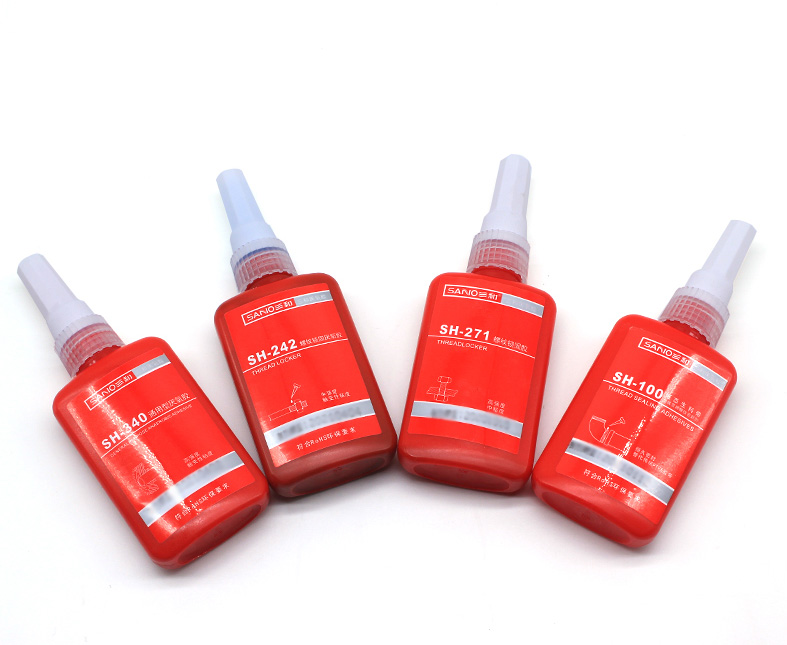
Viable alternatives — quick comparison
Dry-film PTFE: low drag, good for dusty environments, but limited load capacity. Silicone sprays: excellent for plastics and temperature range but poor for high-load metal bearings. Moly/graphite aerosols: great for heavy loads but can be messy and conductive. Grease-in-can: better film thickness and longevity, but harder to apply in tight spots. Choose by load, contamination risk, temperature, and maintenance intervals.
Real-world anchor and sourcing note
Many OEMs and maintenance shops source threaded fastener products and related adhesives from manufacturing hubs in Guangdong—factories near Shenzhen are commonly cited in trade reports for volume production of adhesives and sealants—so it’s practical to check supplier traceability and certification when assessing compatibility with your lubricants. If you inspect a supplier lineup, confirm their batch testing and whether their threadlockers are manufactured in a dedicated threadlocker adhesive factory to avoid formulation inconsistencies that can affect joint performance.
Quick purchasing checklist
Confirm: operating temperature range; load rating or wear test results; solvent compatibility with plastics and paints; food or electrical approvals where needed; clear Technical Data Sheet and Safety Data Sheet; recommended application method. Ask suppliers for test reports and sample parts to trial before committing larger volumes.
Bottom line, ja?
Solve the problem first—know the failure mode, choose the chemistry that fits, test small, and mind storage and compatibility. Reliable documentation and traceable production matter as much as the technical specs; that’s why I look to suppliers with clear datasheets and consistent manufacturing practices, like SANVO, when I need clean, predictable results rather than marketing promises.
