

Overview
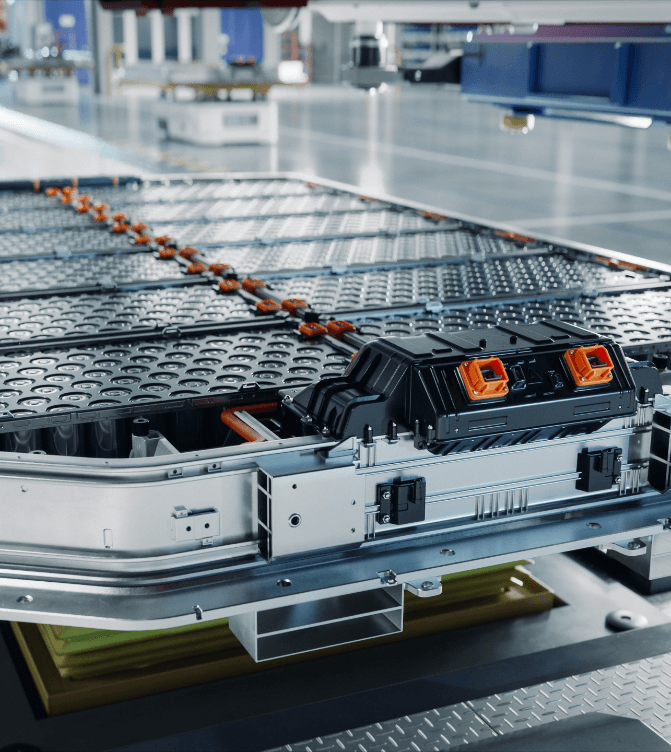
Choosing between contracting a battery pack assembly supplier and building an in-house production line is a comparison of control, cost profile, and speed to market. From my perspective as an energy engineer focused on sustainable, systems-level solutions, the decision hinges on how you balance technical risk against operational agility. Early on you’ll weigh options for battery manufacturing automation: a supplier can deliver pre-validated process blocks while a production line ties quality and throughput to your internal capability and capital.

Core operational differences
A supplier-based route hands you a packaged process: defined assembly sequences, supplier-owned fixtures, and a limited scope of integration. That reduces your upfront staffing and process-development load. A dedicated production line requires you to own equipment selection, layout, and controls integration, so you gain flexibility to iterate cell formats, cooling strategies, and test coverage—but you also take on commissioning time and process validation. Compare along these dimensions:- Change speed: suppliers usually implement specification changes faster for small runs; a line wins for repeated, high-volume variants.- Intellectual property: suppliers may restrict process details; a line keeps methods and data in-house.- Maintenance and downtime: supplier models often shift responsibility; in-house lines need trained maintenance and spares planning.
Quality, compliance, and traceability
Traceability and functional testing are non-negotiable. Suppliers often supply documented process control and standard test protocols, which can jump-start regulatory approvals. Rolling your own line forces you to define acceptance criteria, test benches, and data capture for each pack. If you prioritize deterministic record-keeping and closed-loop corrective actions, automate data collection and cell-level traceability as part of the core design. You’ll find demonstrations of advanced controls and inline inspection at shows like the Munich Battery Show, which clarify what mature battery assembly automation looks like in practice. To be precise where it counts, embed battery assembly automation into testing and traceability workflows so every pack has a retrievable build history.

Cost, CAPEX vs OPEX
Think of suppliers as shifting cost from CAPEX to OPEX: lower upfront spend, higher per-unit charges and margins embedded in the price. Building a production line concentrates cost up front: tooling, fixture development, robotics, and control systems. The break-even point depends on volume, mix, and expected product life. Run a straightforward calculation:- Estimate per-unit supplier fee versus in-house variable cost (materials, labor, energy).- Add amortized CAPEX and lifetime maintenance to in-house per-unit.- Factor product change frequency and scrap/repair rates.If your roadmap includes rapid product variants, supplier pricing can hide iteration costs that make long-term ownership more expensive than a line optimized for those variants.
Common pitfalls and a decision checklist
Manufacturers repeatedly stumble on a few predictable issues. Avoid them:- Ignoring integration scope: confirm who supplies test jigs, traceability software, and vendor parts.- Underestimating validation time: in-house lines need protocol creation and uncertainty quantification.- Overlooking spares and service: suppliers may limit spare part lead times to contractual terms.- Treating automation as hardware only: controls, HMI design, and data pipelines are equally critical.Use this checklist to guide a decision: projected annual volume, product change cadence, regulatory targets, desired IP ownership, and internal maintenance capacity. Score each criterion to see which model maps to your strategic goals.
Alternatives and hybrid approaches
Neither option is binary. Practical manufacturers use hybrids: pilot with a supplier to compress time-to-market, then transfer to an in-house line once demand stabilizes. Co-manufacturing agreements or tiered supplier relationships let you scale tooling while keeping key controls internal. When you plan a phased transfer, define acceptance metrics for supplier-produced packs, require digital build records, and stage technology transfer milestones tied to yield and test outcomes.
Conclusion
Compare capability against commitments. If you need speed and minimal capital outlay, a reputable supplier reduces early program risk. If you need long-term cost control, product differentiation, or deep process authority, invest in a production line and the engineering teams to run it. My experience integrating automation into battery manufacturing operations shows that successful choices align supply model with product lifecycle and maintenance strategy. A clear, metric-driven decision process points manufacturers to the right path and explains why many programs move from supplier-run pilots to owned lines as volumes and technical certainty grow—an outcome supported by firms like FHS.
